
By Cearra O’Hern
When I picture lush gardens, greenery galore and bright flora, our landscape of sand dunes, foamy waves and salt-sprinkled air does not immediately come to mind. Granted, I did not always live or garden in our seaside landscape.
I am from Vermont, the mountainous land of tall trees and wooded patches. Gardening in my home state was rooted in rich, sand-free soil, and plants breathed salt-free air. I have since washed ashore and need to learn the essentials of coastal gardening for my first spring on the Cape.
Let’s dive into the fundamentals of coastal gardening.
 Location & Landscaping
It is essential to understand your gardening space before you dig up the dirt. As a first step, identify and avoid any underground utilities, including buried gas, water, electrical or cable lines. Most of the homes on the Cape use septic systems, so you should also avoid planting shrubs or trees over septic tanks, distribution boxes and cleanouts, as roots can invade and clog systems.
If your garden is in or near wetland resource areas, such as coastal banks or dunes, a permit might be required by the local conservation commission or the Massachusetts Department of Environmental Protection under the Wetland Protection Act. Gardening in rare-species habitats might also require a permit under the Massachusetts Species Act, as planting can alter rare plant or wildlife habitats.
To confirm whether you need a permit for gardening activities, reference the Massachusetts Coastal Landscaping “Do You Need a Permit?” webpage.
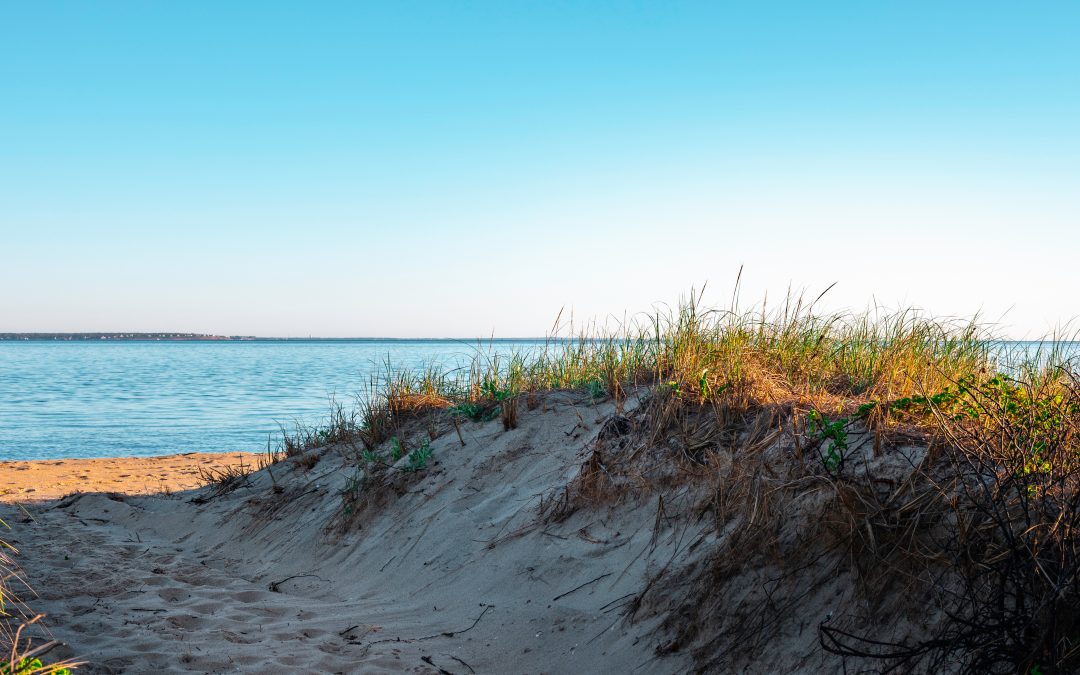
As for planning planting, you may want to form a buffer area of native trees, shrubs and deep-rooted grasses between your gardening space and the shore to stop and slow shoreline erosion, filter sediments and pollutants, and beautify your greenery. You can grade your space to direct runoff away from the shoreline and toward planted areas to reduce erosion of banks, dunes and beaches, and to prevent contaminants from entering bays, harbors and the ocean.
 Tools & Design
Once you have established where your garden will bloom, you can purchase the proper tools and design its layout.
Using the proper tools, including a spading fork, shovel, hoe, trowel, mattock and rake will keep your garden beds lush and prepared for changing weather.
As for design, consider what level of maintenance and aesthetic you desire. Do you want a more manicured or naturalistic garden? Borders, paths and walkways are different methods to give planting areas shape or flow.
You can also develop focal points in the garden, ranging from bold-textured plants to stone walls to birdbaths, and post signs to inform guests or passersby of your flora.
 Sand & Soil
Sand is everywhere on the Cape—in our shoes, in our swimsuits, even in our soil. Understanding our soil is crucial in finding success in coastal gardening.
On dunes, beaches and other sandy areas, you can usually plug plants directly into the sand.
You can augment sandy soils with compost, such as vegetable scraps and grass clippings, during initial planting, as even species that tolerate well-drained, sandy soils require more moisture and nutrients while first spreading their roots.
Mulch should not be used on a coastal dune or bank face with loose sediments. The loose sediments should be maintained in as natural a state as possible to ensure the erosion process that supplies sediments to other coastal areas is not interrupted. Mulch can be appropriate for the root zones of newly planted trees and shrubs.
In heavier soils, dig a proper hole for a new plant. Once the plant is installed, the base of its stem or trunk should be level with the surrounding ground.
For most plants, fertilizer should not be applied at planting. Fertilizers contribute to water quality degradation in our coastal embayments and freshwater ponds. If fertilizer is required, use only the minimum amount necessary, and know it is not needed once the plants are well established.
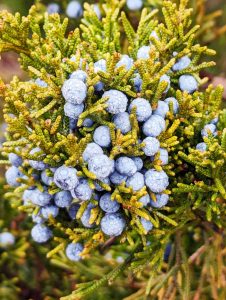
GENE M. MARCHAND
Eastern red cedar berries in water droplets at South Cape Beach.
Salty Sea Breeze & Watering
Our wind is laced with sea salt, and if you are gardening where you can see the ocean, your beds may be exposed to the spray.
Similar to the buffer mentioned earlier, you can build a wind screen with hardier trees or shrubs, such as evergreens, to protect the less-wind-tolerant plants in your space.
Native species, which we will discuss in more detail momentarily, typically do not require watering. When newly planted during the appropriate time of year, some species, such as the American beach grass planted in dunes, do not require watering.
 In coastal dunes and bank areas, some supplemental irrigation may be necessary to ensure gardening success. Newly planted vegetation requires temporary, automated irrigation systems used throughout the spring and fall until the roots can effectively find and absorb moisture from surrounding soils.
Permanent irrigation systems and heavy watering, on the other hand, are often unnecessary and not recommended. Established greenery does not require watering, and excess water from permanent irrigation systems can exacerbate dune and bank erosion, and can even lead to bank failure.
There are numerous ways you can improve water retention and nutrient levels in plants and soils to boost your garden’s survival rate, such as applying organic compost. You can connect with a professional to determine appropriate watering methods to ensure plant establishment while avoiding impacts to coastal resource areas.
GENE M. MARCHAND
Colorful beach plums at South Cape Beach.
Choosing Plants
Finally, we have arrived at the most exciting section—selecting the greenery and flora to decorate your coastal garden. But first, when will you plant these plants?
Most coastal species are best planted or transplanted in the spring or fall, as more rainwater is available, lower temperatures maintain soil moisture and heat stress is less likely. Beach grass, however, is planted in late fall, through the winter and into spring, except in areas exposed to strong winds or waves. In those areas it should be planted in the spring to reduce the likelihood of being washed or blown away in winter storms, which we were all too familiar with this winter.
Choosing native species, otherwise known as plants accustomed to the Cape’s environment, will thrive with little need to introduce soil nutrients that will eventually end up in our waterways or groundwater. Choosing native plants over exotic flora will support numerous Cape-wide efforts to improve and protect our water quality.
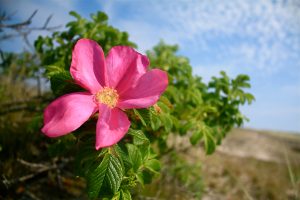
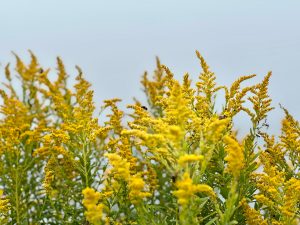
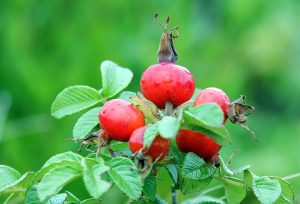
 Many of our native greenery are drought- and spray-tolerant, including beach plum, Bayberry, seaside goldenrod and eastern red cedar. These are just a handful of species well-adapted to the toughest coastal locations, including dunes, making the plants wonderful choices for seaside landscapes like the Cape. Bayberry and seaside goldenrod leaves also hold and retain moisture, despite the salt-sprinkled air that dehydrates plant cells.
Native species also support pollinators, birds and other wildlife that comprise our local ecology. If you do not have native plants in your garden now, you do not need to remove the existing plants; simply adding as many native species as you can will protect our environment and ensure success in your coastal garden.
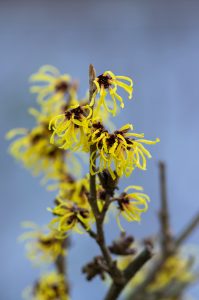
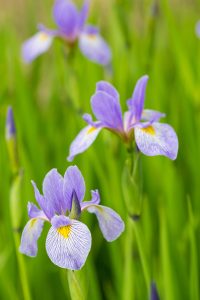
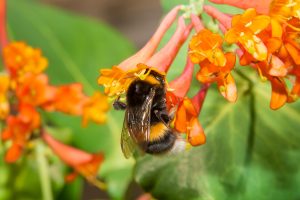
Before closing this section, here are a few other native species: coastal sweet pepperbush, witch hazel, trumpet honeysuckle and blue flag iris.
There are so many beautiful native plants on the Cape, and our gardens will soon show them in bloom.
 Eco-Friendly Pest & Weed Maintenance
No one likes pests or invasive species. Unfortunately, they find their way into our coastal gardens.
To manage weeds or invasive species, grow plants densely, abundantly and in layers. Take time and care to control and remove invasive species.
 Patience is essential to pest control. You must acknowledge that garden pests exist, and learning to move with the flow will make the maintenance experience more enjoyable.
Avoid using pesticides that harm our ecosystem or waterways in maintenance. Late-spring cleanups or pruning can also support garden maintenance and health.
I have lived my whole life in a landlocked landscape. After living on the Cape for a few months I understand so much of this area is tailored to our coast, including our gardening.
I wish you bright native flora, appropriately sandy soil and lush beds this spring. Happy coastal gardening!