
By Christine Lynch
Winter weather makes us seek shelter in a warm place stocked with food. Outdoor animals are no different. They do their best to find a secure, dry space out of the wind that conceals them from harm and is near food. It’s when those critters look for shelter in our houses or vehicles (cars, trucks, motorbikes, boats) that problems can arise.
In fact, one of our first pets came to us after a friend heard plaintive meowing from under her car hood one cold morning. Our friend discovered the small white/tabby kitten sheltering by her car engine, before the kitty came to any harm. From that incident, we’ve learned to check under the hood or at least honk the horn to alert any sequestered animals before starting the car.
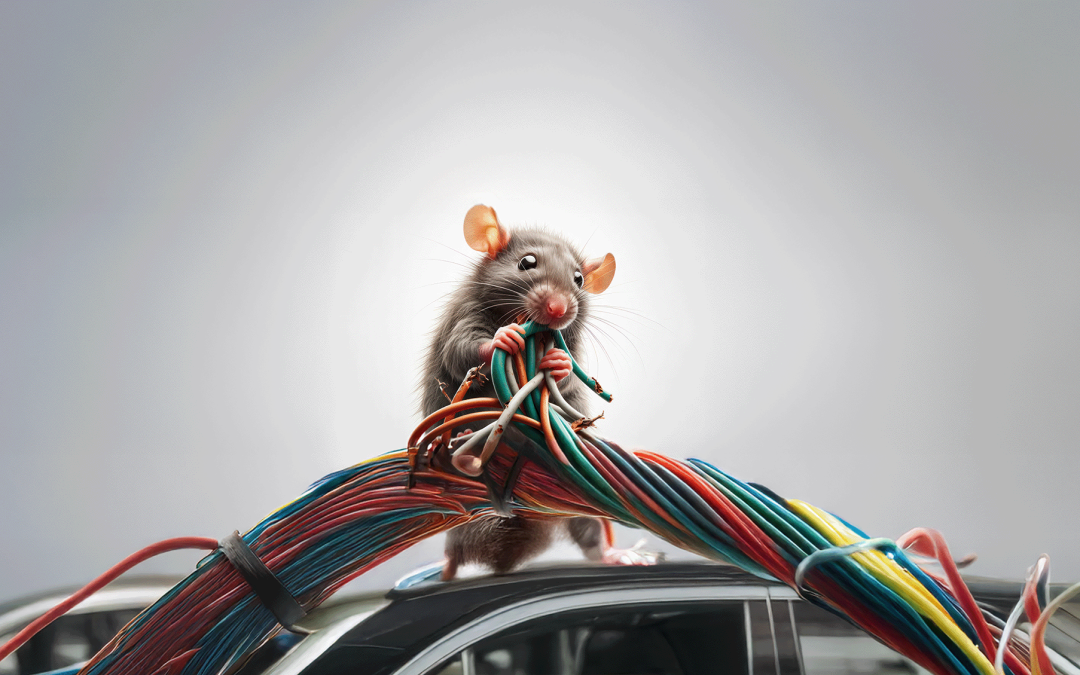
Living on the Cape, we are lucky to have nature around us. But because of this proximity, woodland animals frequently roam by our houses and driveways. In cold weather, they’ll burrow into any convenient spot that’s out of the elements, such as our vehicles. Once they get in, they’ll likely begin gnawing away on wires, cables and whatever else is in their path. A good plan is not to let wild animals burrow into our vehicles or structures. There are ways to help prevent this (recommendations are below), but first, you need to be aware of potential trouble.
When people discover damaged wires in their cars, it’s usually after the car won’t start or the heating system doesn’t work. Besides the inconvenience, expensive repairs soon follow. One worst-case scenario that someone shared was when her car died suddenly as she was traveling on a highway. It was scary, inconvenient and cost her a lot of money, but she fortunately was not involved in an accident.
Amanda Schiffmann, a graphic designer at the Enterprise, relayed her own experience: “I went to start the car, but when I stepped on the clutch, it just sank all the way to the ground and didn’t come back up.” (Two thumbs up for driving a manual transmission!) Giving it another try, she added, “I pulled the pedal back up by hand and tried again, same thing happened.”
After AAA towed her car to the service center, she said, “The technician said that it looked like a rodent had chewed the clutch line, blowing it out. It cost me $758 to repair.”
 To prevent a recurrence, she searched online for suggestions. “The two main things I found were an ultrasonic repellent device, which goes under the hood of your car and attaches to the battery, and spraying peppermint essential oil under the hood,” she said, opting to try “a mixture of diluted peppermint oil around the edges under the hood and on my tires,” because she had read that mice climb up the treads to get up under the hood.
Coincidentally, when I suggested writing a magazine article about this topic, Enterprise publisher John H. Hough also had his own critter encounter. “I’ve had mice chew the knock sensor out of my car, resulting in a $500 repair,” he said.
In our neighborhood, the people across the street had mice damage in their car engine. Their service person gave them tips to prevent future attacks, such as moving the car each day to different spots of the driveway. They shared this advice with us and also recommended planting peppermint along the length of the driveway. Being nice neighbors, they brought over several plants so that we could start our own literal line of defense. They also now apply peppermint oil to car vents and wheel wells, as Schifffmann suggested.
There are many other townspeople who have dealt with this annoyance. I have talked with several others who either personally had their car affected or know of someone who has. It’s more widespread than you might think.
In Bourne, the Atlantic Subaru service department logs many vehicles with rodent-related problems. Assistant service manager Jesse Ducharme said, “We see all makes and models coming in that exhibit rodent damage. And, the drivers come from all over the Cape and islands.” She said repairs range from minor outer wire nibbling up to “extensive gnashing through wires, cables, even seats, foam and insulation.”
And as often happens, when a car stops functioning, AAA gets a call to help the driver. John Paul, manager of traffic safety (also known as the Car Doctor) with AAA Northeast, acknowledged, “This is a multimillion-dollar problem. It’s getting fairly common with more cars on the road, along with increased development that’s removing natural habitats. Rodents have been eating wires since there were wires.” They must grind on objects because their front teeth grow continuously and must be trimmed.
Another possible reason for an uptick in these incidents, he said, is that “over the last couple of decades, manufacturers have switched from a petrol-based wire insulation to soy-based.” Though not certain we notice more chewing now with soy-based, he asked, “Is soy an attractor for animals? Or perhaps it’s not as much of a deterrent as petrol-based.”
Paul said the key is to minimize the attraction. “Keep food sources, such as birdseed or pet food, away from vehicles. That goes for water sources, too.” If you’re fortunate to have a garage, he suggests taking the time to locate and plug up any small holes with something like steel wool because “Mice can crawl through a hole the size of a dime.” Inside the vehicle, he recommends keeping a known prevention, such as mint oils or sachets. EarthKind, Pest Vault and Vamoose are well-rated, plus they are long-lasting and have a pleasant aroma. Paul said he’d prefer a nicer scent in his car than “using mothballs or sprays that mimic a predator’s urine.”
Boats are another concern for owners, especially when they stay out of the water for off-season storage. Marine sales and repairs are a big part of the Cape economy. Businesses such as The Boat Guy in Cataumet know how vulnerable boats are, especially if they aren’t moved over several months. Even with secure shrink-wrapping, animals might find their way through small holes, then have access to all areas. Boat owners spread dryer sheets throughout the boat and use some of the precautions suggested above.
The same precautions are needed to safeguard a residence. Animals can easily dig into homes and outbuildings, creating many unnecessary problems for residents. Damage can vary from minimal to alarming. In fact, the National Fire Protection Association states that rodent-chewed wiring is known as an attributable cause of structural fires.
So, it’s helpful to know that wildlife could try to crawl inside places we’d rather they didn’t. Do what you can to keep them away before any problems start.